

By BERGE JOLOLIAN
Azerbaijan cannot prepare for peace while imprisoning the scholars, minority advocates and journalists who challenge hostility toward Armenians.
In Washington on August 8, 2025, Armenia and Azerbaijan signed a joint declaration and initialed the text of a peace agreement. This was a serious diplomatic achievement. It did not, by itself, reconcile the two societies.
At their August 31, 2026, meeting in Bishkek, Pashinyan and Aliyev highlighted petroleum exports from Azerbaijan to Armenia, the transit of grain and other goods through Azerbaijan, new business contacts, work on TRIPP and contacts among parliamentarians and civil-society representatives. These are meaningful steps. They also make the treatment of Azerbaijan’s independent voices more consequential.
For several years, Prime Minister Nikol Pashinyan has taken the case for peace directly to Armenians, including residents of vulnerable border communities and students. His decisions and language remain open to criticism. Yet he has repeatedly asked a wounded society to imagine coexistence and to define its security through the sovereign Republic of Armenia within internationally recognized borders.
President Ilham Aliyev has followed a different domestic course. Azerbaijan negotiates abroad while official rhetoric at home glorifies military victory, describes Armenia as a “fascist state” and uses the territorial language of “Western Azerbaijan.” Whatever grievances Baku invokes, such rhetoric preserves Armenia as a permanent enemy in the public mind.
Durable peace requires citizens able to question inherited hatred, report inconvenient facts and speak across the border. Azerbaijan has imprisoned or silenced many of those people. Yet another Azerbaijan exists among scholars, journalists and minority advocates who reject the idea that patriotism requires hostility toward Armenians.
The People Who Chose Dialogue
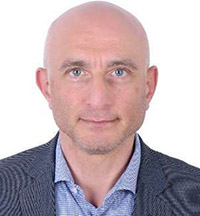
Bahruz Samadov is an Azerbaijani scholar and peace advocate who criticized militarism and supported dialogue with Armenians. Authorities arrested him on August 21, 2024, and charged him with high treason. On June 23, 2025, a court sentenced him to 15 years after proceedings effectively closed to independent observers. Samadov denied collaborating with Armenian intelligence. Amnesty International said no credible evidence had been presented publicly and described his prosecution as punishment for peaceful expression, anti-war advocacy and dialogue. His lawyer and family have also raised serious concerns about his health.
Igbal Abilov is a Talysh scholar of minority languages, history and culture. On May 20, 2025, the Lankaran Court for Grave Crimes sentenced him to 18 years for high treason and inciting ethnic hatred after a closed trial. Abilov denied the charges. According to Amnesty, the principal evidence described by his colleagues consisted of scholarly exchanges about minority rights with an academic in Armenia; no classified information or credible public evidence of treason was identified. United Nations experts later called for the release of Abilov and Samadov.
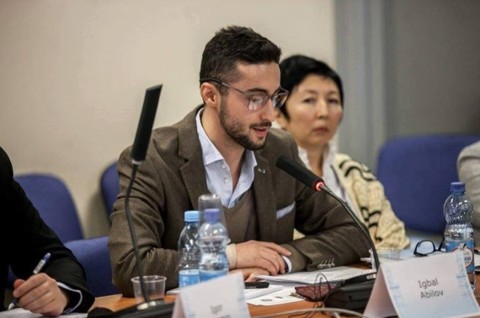
Recent reports add a medical concern. Abilov’s support committee said he was moved from a punishment cell to a prison medical unit on August 21, 2026, with a high fever and dizziness, then returned four days later before recovering. It said his chronic bronchitis and breathing attacks had worsened. The account, summarized by JAMnews on September 9, requires independent medical verification and access.
When Minority Identity Becomes a Security Question
Abilov’s case exposes the vulnerability of Azerbaijan’s Talysh minority. Talysh communities live in Azerbaijan and Iran, and scholars often work elsewhere. Contacts with Iran or Armenia and discussion of Talysh history can therefore be recast as security threats. The Council of Europe’s Advisory Committee on the Framework Convention for the Protection of National Minorities reported that expressions of Talysh and Lezgin identity could be viewed as challenges to Azerbaijan’s territorial integrity. It also noted suspicions surrounding Talysh cultural conferences and the limited public use of minority languages.
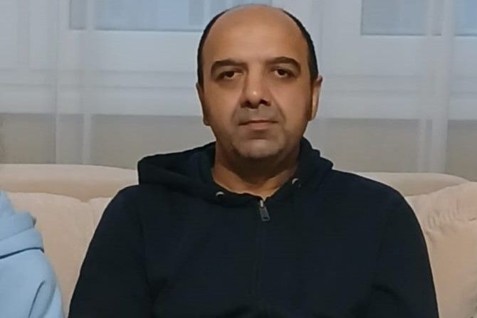
The pattern continued on September 8, 2026, when the Baku Court on Grave Crimes sentenced Talysh activist Jahid Kamal Isayev, generally identified in reporting as Kamal Isayev, to eight years and six months in prison and a fine. Isayev denied advocating Azerbaijan’s partition. His lawyer said his work concerned Talysh language and cultural heritage and announced an appeal. OC Media reported the judgment the following day.
How Isayev entered Azerbaijani custody is contested. State-aligned accounts describe an arrest in Turkey and transfer to Azerbaijan. His family and rights advocates call it an unlawful abduction, saying he traveled on a Russian passport. Human Rights Watch described the transfer as forcible and placed it within a wider pattern of transnational repression against Azerbaijani critics abroad.
States may prosecute genuine espionage, violence and financial crimes. The standard is specific evidence tested in fair proceedings. Closed trials and the treatment of academic contact or minority advocacy as proof of disloyalty do not meet that standard; they warn an entire society that unsupervised dialogue is dangerous.
Journalism and the Public Narrative
The same system reaches independent journalism. Reporters associated with Abzas Media investigated corruption, while journalists connected with Toplum TV and Meydan TV worked outside direct state control. Azerbaijan says the resulting prosecutions concern smuggling, foreign funding, taxes or other crimes. The repeated use of similar charges, followed by severe sentences and the dismantling of newsrooms, is difficult to dismiss as coincidence.
In June 2026, the Parliamentary Assembly of the Council of Europe said no independent media outlet remained in operation inside Azerbaijan. It cited a local rights group’s list of 328 political prisoners as of May, including 31 journalists; the Council of Europe’s journalist-safety platform separately recorded 36 detained journalists.
On July 28, 2026, nine Toplum TV journalists and activists received sentences of 12 to 15 years. Founder Alasgar Mammadli received 14 years; co-founders Akif Gurbanov and Ruslan Izzetli received 15 years each. The defendants denied the charges and called the case politically motivated. International press-freedom organizations condemned the verdicts, according to the Associated Press.
On September 7, 2026, a court sentenced election monitor and human-rights defender Anar Mammadli to 13 years and activist Anar Abdullayev to 12 years on charges including currency smuggling, illegal entrepreneurship, tax evasion and money laundering. The government maintains that defendants described abroad as political prisoners face ordinary criminal charges. Amnesty International said the prosecution presented no credible evidence and called the proceedings unfair.
Outside scrutiny has narrowed as well. In February 2025, Azerbaijan ordered the suspension of the BBC’s Azerbaijani operation, prompting the BBC to close its Baku office. That month, authorities also revoked Voice of America’s accreditation; in May, former VOA correspondent Ulviyya Ali was jailed on smuggling charges she denies. In June 2025, Farid Mehralizada of Radio Free Europe/Radio Liberty’s Azerbaijani service received a nine-year sentence alongside six Abzas Media journalists. When domestic newsrooms are dismantled and foreign reporting is pushed out, the state gains greater power to determine how citizens understand the conflict and imagine Armenians.
Preparing Societies for Peace
The longest test of peace lies in public memory and education. The Council of Europe’s European Commission against Racism and Intolerance has documented hostile rhetoric about Armenians in Azerbaijan. Its 2016 report said political leaders, educational institutions and media continued using hate speech and warned that a generation had grown up hearing it. United Nations experts have also urged that teaching materials avoid prejudice, racial hatred and dominant ethnic narratives.
Azerbaijani suffering must also be taught honestly: displacement, destroyed communities, the dead and missing, and crimes committed during the conflict are not secondary histories. Armenians should be prepared to hear them. Recognizing one people’s pain does not erase another’s, and teaching history need not assign inherited guilt to a neighboring people.
The obligation is reciprocal. In December 2021, the International Court of Justice ordered Azerbaijan, as a provisional measure, to prevent the promotion of racial hatred against people of Armenian national or ethnic origin, including by officials and public institutions. In the reciprocal case, it required Armenia to prevent organizations and private persons from inciting hatred against Azerbaijanis. These were provisional measures, not final judgments, but their principle was clear: neither state can pursue peace abroad while tolerating racial hatred at home.
This is not a judgment against every Azerbaijani, nor is Armenia free of chauvinism or historical myth. Samadov, Abilov, Isayev and many less visible Azerbaijanis refute collective blame. The relevant distinction is political direction. In Armenia, disagreement over peace remains public. Pashinyan has defended border delimitation in Tavush, discussed sovereignty and peace with students, and urged citizens to place the internationally recognized Republic at the center of national strategy.
For more than three decades, Azerbaijan’s presidency has remained within one family: Heydar Aliyev was succeeded by his son Ilham in 2003, and Ilham appointed his wife, Mehriban Aliyeva, first vice president in 2017. The concern is not lineage alone, but a system in which succession, institutions and the permitted public narrative have become concentrated around one family.
Aliyev’s government has not undertaken a comparable public preparation for peace. Diplomatic language abroad competes at home with triumphalism, territorial renaming and narratives in which Armenia is defeated but remains permanently suspect. A population prepared only for victory is not automatically prepared for coexistence.
That asymmetry is clearest in Baku’s continuing insistence that Armenia alter its constitutional framework before the initialed agreement can be formally signed. Azerbaijan says the Constitution’s preamble indirectly preserves a territorial claim; Armenia rejects that interpretation. Yet Articles I and II of the agreement already require both states to recognize each other’s borders and renounce territorial claims, while Article VIII requires them to combat intolerance, racial hatred and discrimination. If Armenia must demonstrate constitutional readiness for peace, Azerbaijan should demonstrate societal readiness: end official “Western Azerbaijan” rhetoric, remove anti-Armenian hostility from state messaging and education, allow independent access to Armenian detainees and fair review of their cases, and stop treating Azerbaijanis who advocate dialogue as security threats. Peace cannot rest on constitutional change by one side while the other side’s public culture of hostility remains intact.
Armenia is also trying to give peace a physical foundation. Crossroads of Peace proposes reopened transport, energy and communications links under the sovereignty and jurisdiction of the countries they cross. The Washington framework added the proposed Trump Route for International Peace and Prosperity, or TRIPP. Its final form remains to be negotiated, but any route inside Armenia must remain under Armenian sovereignty, jurisdiction and law. Trade can create interests opposed to renewed war, but infrastructure cannot substitute for freedom or public reconciliation.
France and Germany understood that after three wars between 1870 and 1945. The 1963 Élysée Treaty institutionalized cooperation, youth exchanges and language learning; later, educators produced a joint history textbook. Armenia and Azerbaijan cannot copy that experience mechanically. They can apply its central lesson: former enemies become neighbors when governments protect dialogue and allow history to be examined rather than weaponized. Peace must be taught as well as signed.
Controlling Scrutiny at Home and Abroad
In March 2025, Azerbaijan ordered the International Committee of the Red Cross to close its delegation. The ICRC had been the only international organization permitted to visit former Nagorno-Karabakh officials detained in Baku. International observers and foreign media were also denied access to their trials; Reuters reported that it could not enter Ruben Vardanyan’s courtroom throughout the proceedings. Removing humanitarian access while excluding independent scrutiny leaves the government’s account effectively untested.
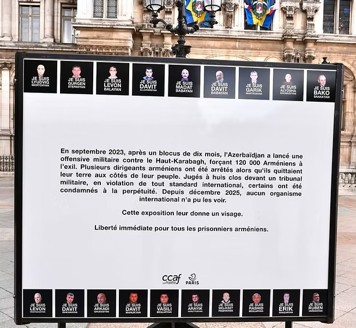
The effort to control the peace narrative also reaches abroad. From August 31 through September 4, 2026, an installation outside Paris City Hall displayed portraits of 19 Armenian prisoners and detainees held in Azerbaijan. Azerbaijan’s ambassador asked the city to cancel it, describing those shown as convicted war criminals and the event as contrary to peace. Organizers said the official September 2 inauguration was canceled after warnings concerning the safety of French citizens in Azerbaijan; the published ambassadorial letter objected forcefully but contained no explicit threat. The exhibition remained on display.
Azerbaijan may defend its judgments and dispute the legal characterization of individual detainees. Peace does not require foreign cities, journalists or human-rights advocates to accept those judgments without scrutiny. A government confident in its evidence should tolerate independent examination of its trials.
The Azerbaijanis Peace Will Need
The costs of this system are borne by ordinary people, though in different ways and on different scales. Armenians have endured war, forced displacement, detention and state-promoted hostility. Azerbaijanis who reject militarism or expose corruption face censorship, prison, exile and fear. Both societies pay when permanent enmity becomes an instrument of political rule.
Armenian organizations have every right to criticize Pashinyan and his government. But opposition to one administration should not become indifference to the Republic. Governments change through elections; Armenia’s security and sovereignty must remain a shared responsibility across political divisions.
Diaspora advocacy should keep Armenian detainees on the diplomatic agenda, demand fair legal review and expose educational hatred. It should also support Azerbaijani journalists, scholars and minority advocates who challenge the machinery of hostility. That is not a favor to Aliyev’s government. It helps create the kind of neighboring society with which Armenia might sustain peace.
Diaspora institutions can support independent Azerbaijani media in exile, create secure forums for Armenian and Azerbaijani researchers, fund careful reviews of textbooks and public rhetoric on both sides, and press governments that work with Baku to raise academic and press freedom. Such work joins accountability to the practical task of building a safer neighborhood for Armenia.
Armenia cannot base its security on the hope that Azerbaijan will liberalize. It must strengthen its armed forces, democratic institutions, economy and partnerships. But hard security and human contact are not rivals. Armenia is safer when Azerbaijanis can contest permanent enmity and when fewer people across the border see renewed war as desirable.
The most revealing test of Azerbaijan’s peace policy is whether an Azerbaijani can argue for reconciliation without being treated as a traitor. A treaty may end the legal state of conflict. It cannot create trust while textbooks preserve hostility, journalists cannot investigate the government and scholars risk prison for speaking to Armenians.
The other Azerbaijan exists in prison cells, courtrooms, exiled newsrooms and among citizens who refuse to accept hatred as patriotism. These are the Azerbaijanis Aliyev silences. They are not enemies of Azerbaijan. They may be the Azerbaijanis peace will need most.
Berge Jololian is an Armenian-American IT and cybersecurity professional based in Yerevan, Armenia, and Watertown, Massachusetts. His writing examines Armenian statehood and sovereignty, relations between the Republic of Armenia and the Diaspora, regional security, and the strategic choices facing small states in a changing international order.