While representatives of indigenous peoples from around the world recently gathered in Armenia for COP17 to raise awareness about their ancestral territories and demand a voice in decisions affecting them, the Indigenous Armenians of Artsakh were denied that same platform. Despite applying, organizations from Artsakh were rejected from hosting a dedicated pavilion in the conference’s “Green Zone” in Yerevan.
During the dry months when the Amazon’s rivers recede, Inara Vati’s community faces both fish shortages and disrupted supply routes, as the waterways they rely on for transporting essential goods become increasingly difficult to navigate. Yet this season also brings an opportunity for tradition: Inara gathers forest seeds to craft necklaces and bracelets, passing down the artisanal skills she practiced prior to her advocacy work to her five children.
A member of the Sateré-Mawé people, Inara Vati now serves as co-coordinator of the coordinating body for Indigenous organizations in the Brazilian Amazon. Like several other Indigenous groups in the region, the Sateré-Mawé live near Manaus in the lower Amazon River basin, on a territory that was demarcated in 1982 and officially recognized in 1986.
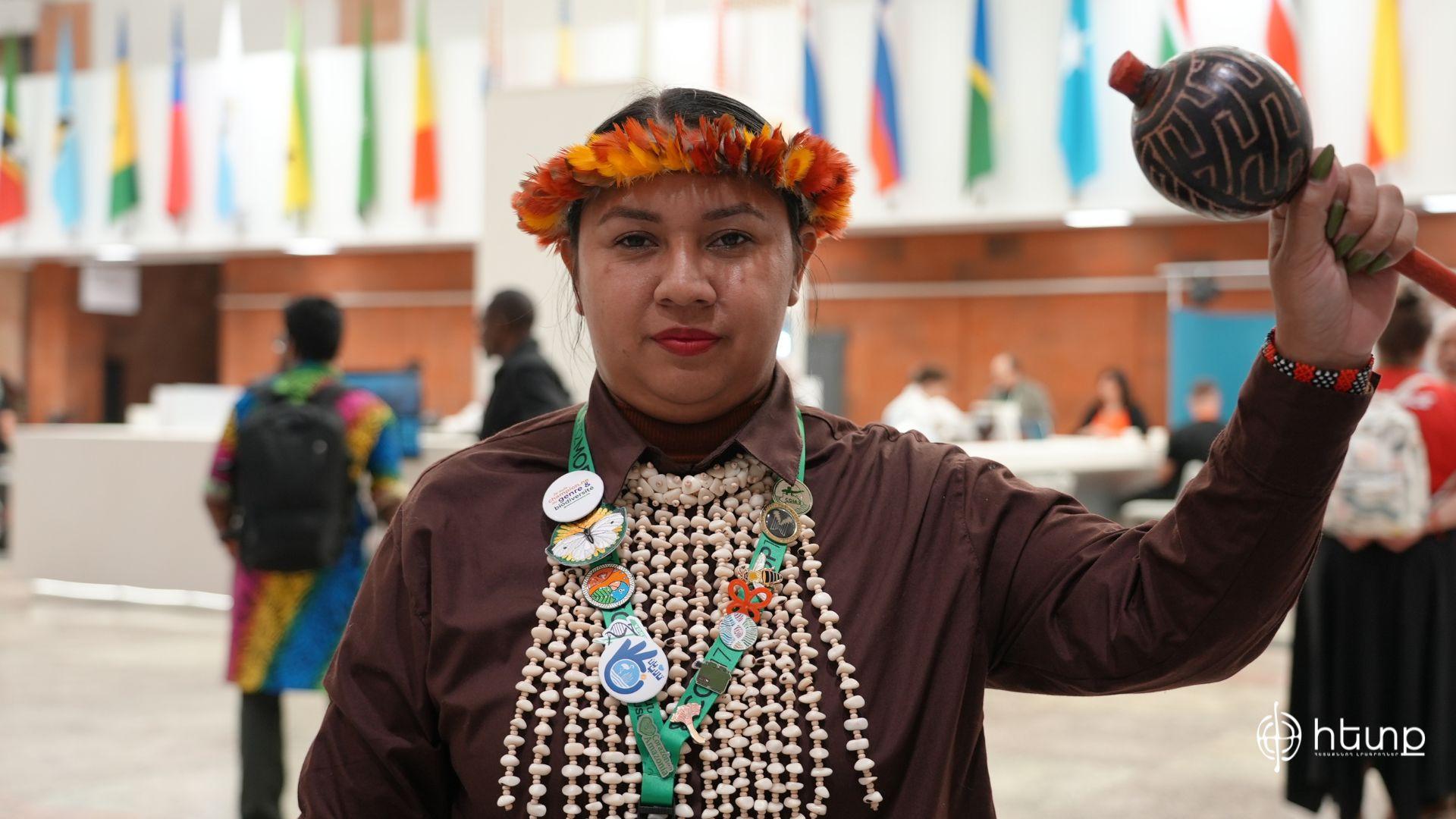
Life in this community shifts with the changing seasons. When river levels rise, travel becomes much easier and the land yields more abundant produce.
During the dry season, however, daily life grows more precarious. Residents shift their focus to gathering seeds and must tend their cultivated plots with extra vigilance to protect against fires. At the same time, food supplies like fish and game become scarce, and the receding waters of the Amazon River disrupt transportation, limiting the community’s access to essential goods.

According to Inara Vati, they consume a great deal of fish. At the same time, however, they rely on plots of land that they cultivate to grow crops—such as manioc, which is processed into flour.
In a conversation with Hetq, Inara Vati explained that the Sateré-Mawé people have various rituals, accompanied by specific songs. One such ritual is the tucandeira . Participants in this ritual insert their hands into special gloves filled with stinging ants. This ceremony—accompanied by traditional songs and dances and led by village elders—marks a youth’s transition into adulthood.
Who are the indigenous peoples?
Indigenous peoples share a profound cultural connection with nature, shaped by their traditional knowledge and practices. This knowledge and understanding of biodiversity, in turn, play a crucial role in its conservation and sustainable use. The concept of “indigenous peoples” does not yet have a clear, internationally established definition and is used as a working term.
According to this understanding, they are the heirs and bearers of unique cultures and distinct ways of relating to their environment. Their social, cultural, economic, and political characteristics differ from those of the dominant segments of the societies in which they live. At the same time, indigenous peoples seek recognition for their identity, their way of life, and their rights over their traditional lands and natural resources.
Despite their cultural differences, the world’s indigenous peoples share common challenges regarding the protection of their rights and are considered among the most vulnerable and disadvantaged groups globally.
At the COP17 conference held in Yerevan, the rights of various indigenous peoples worldwide—as well as the regulations governing the implementation of these rights—were actively discussed.
The Convention on Biological Diversity—specifically Article 8(j)—defines the role and importance of indigenous peoples in the conservation of biodiversity. According to this provision, “Each Party to the Convention, to the extent feasible and as appropriate, and in accordance with its national legislation, respects, protects, and preserves the continuity of the knowledge, innovations, and practices of indigenous peoples and local communities that reflect traditional lifestyles and are relevant for the conservation and sustainable use of biodiversity. It promotes the wider application of such knowledge, with the approval and involvement of the knowledge holders, and encourages the equitable sharing of benefits arising from its use.”
Under the Kunming-Montreal Global Framework (Target 22), all stakeholders—including indigenous peoples and local communities—must participate in decision-making processes related to biodiversity. Moreover, the participation of indigenous peoples and local communities must be full, equitable, inclusive, effective, and gender-responsive. Their cultural distinctiveness, as well as their rights over their territories, lands, and traditional knowledge, must be respected.
Their knowledge of local ecosystems plays an essential role in learning from and replicating sustainable resource-use practices—such as traditional hunting and fishing, selective harvesting, and so forth.
The territories of indigenous peoples are diverse, ranging from forests and wetlands to mountains and coastal areas rich in biodiversity. In these regions, they often employ sustainable land-use practices, including agroforestry, shifting cultivation, and environmental management systems based on community participation.
Given these specific characteristics, indigenous peoples should be involved in the processes of developing effective biodiversity conservation strategies.
Beyond ensuring participatory decision-making, Target 22 also entails protecting individuals or groups who work on environmental conservation, advocate for environmental justice, and defend the rights of Indigenous peoples and local communities. The rights of indigenous peoples must be exercised without persecution or retaliation, and without the use of violence or intimidation against them.
Progress toward this target is particularly important, as it will directly contribute to the realization of all goals and targets. It is especially significant for achieving targets 1, 3, 5, 9, 13, 21, and 23.
“We should not be viewed as observers; we should be viewed as stakeholders.”
During the Biodiversity Conference in Yerevan, delegations and representatives from over forty indigenous peoples—hailing from the Amazon, Africa, Asia, North America, and the Arctic—were in attendance. Throughout the conference, they actively participated in discussions on diverse topics within the “Green” and “Blue” zones. During these discussions, they raised key issues that confront nearly all Indigenous peoples.
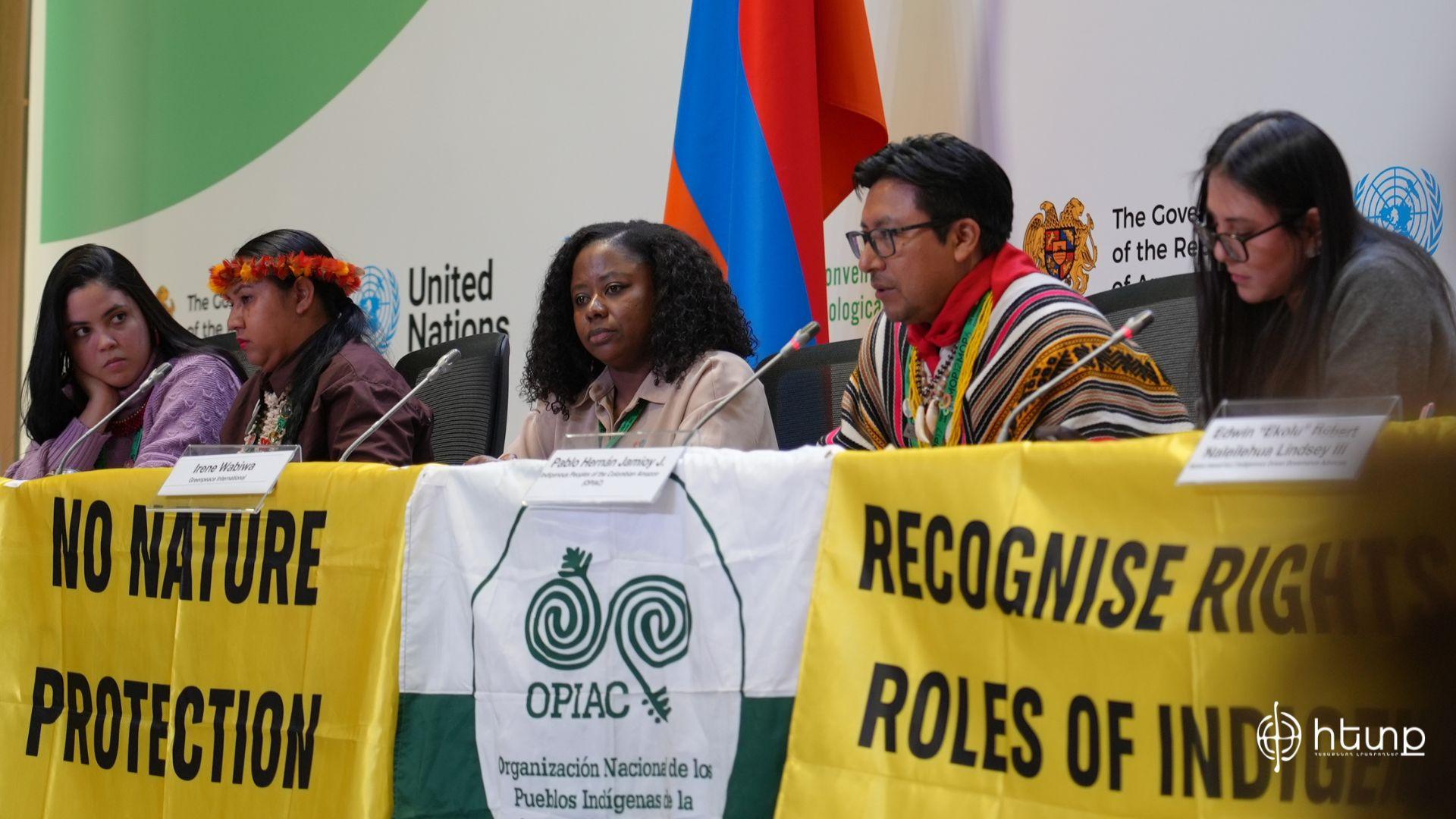
In a conversation with Hetq, Inara Vati noted that their territories are frequently subjected to incursions for the purposes of logging and the illegal seizure of land. She added that the mining industry has gained significant momentum in recent years. On October 29, during a press conference for Indigenous peoples in the Blue Zone, Pablo Hernan—a representative of the indigenous peoples of the Colombian Amazon—noted that since COP16, numerous species in the Colombian Amazon have been pushed to the brink of extinction.
“Our territories are under pressure. While governments wait for yet another round of negotiations—like this one—nothing changes in our territories. We are disappointed because, although we have come here with a shared goal, it seems that this goal has splintered into thousands of different interests,” he said.
His demand concerned the status of Indigenous peoples within the negotiations.
“We should not be viewed as observers; we should be viewed as parties. We are among the primary actors in protecting the planet’s biodiversity, yet here, our voice is constrained. In fact, we have almost no voice at all. We are forced to act through allies and friends,” added Pablo Hernan.
Another requirement is direct funding—free from bureaucracy and other obstacles. Because of these, communities are unable to obtain direct financing for projects aimed at mitigating and adapting to climate change.
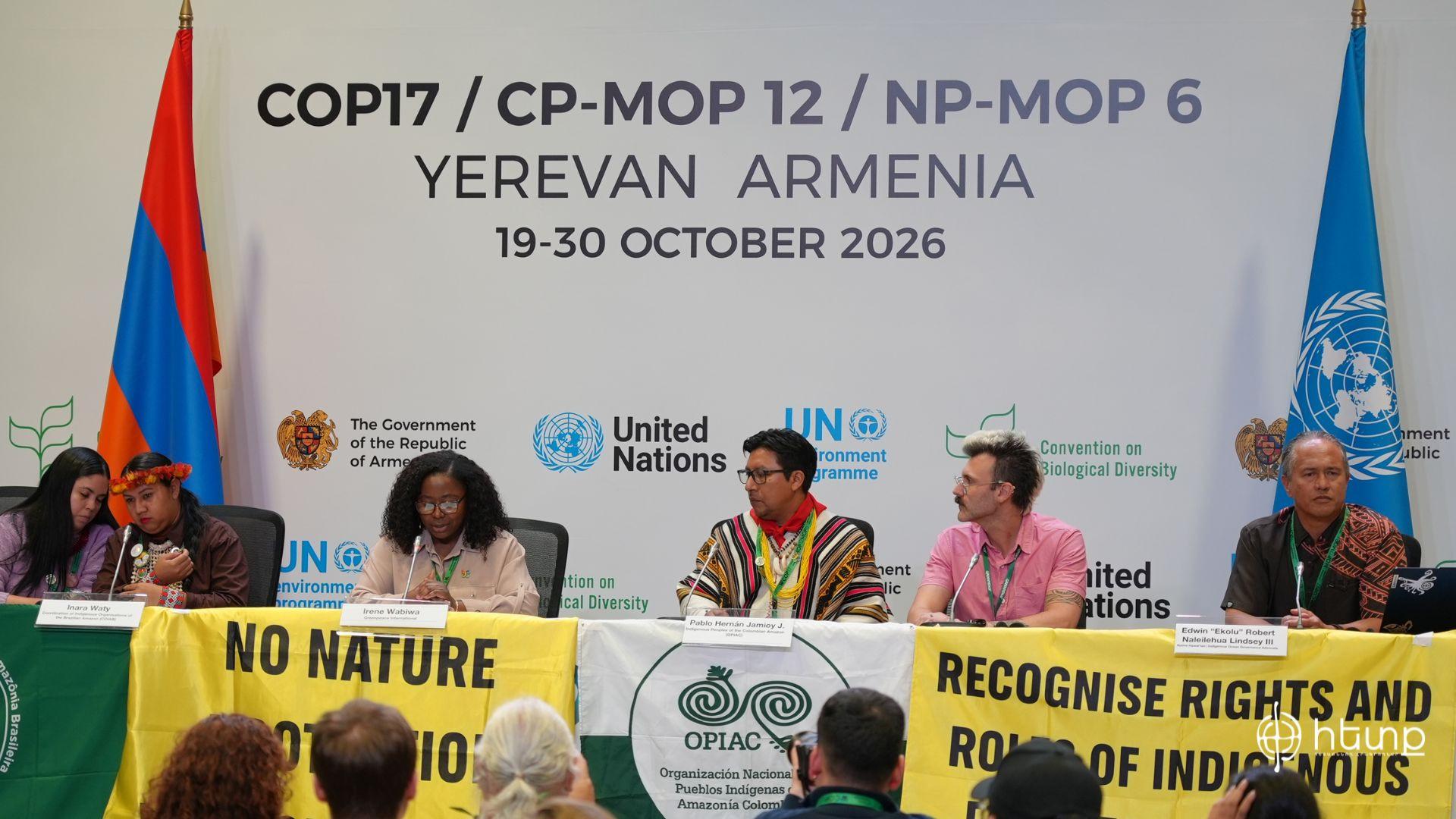
He also pointed out the issue regarding their exclusion from Colombia’s official state delegation. While they had been included in the state delegation for previous meetings—as well as for COP16—no such opportunity was available for this conference. Being part of the delegation would have provided greater scope to work and to seek ways to incorporate their proposals into the texts of the decisions.
Robert Naleilehua, a representative of indigenous peoples focused on ocean governance, also expressed dissatisfaction with the format of the negotiations. He noted that the structure is not designed to accommodate the traditional participatory practices of Indigenous peoples; instead, they are forced to adapt to a system that they find difficult to navigate.
It was with the demand to address these and other issues that Indigenous representatives arrived in Armenia for COP17.
“We want the commitments enshrined on paper to be translated into concrete decisions.” “In discussions and negotiations, we are pushing for the requirement of direct access to funding for Indigenous peoples,” Inara Vati noted in her speech.
Armenia’s National Strategy, Indigenous Peoples, and Local Communities
Within the framework of COP17, Armenia’s national strategy does not explicitly mention indigenous peoples; however, it does include commitments regarding local communities. Target 29 provides for the involvement of local communities in environmental governance—a measure that, according to the strategy, contributes to Global Target 22. By 2030, Armenia is tasked with ensuring the full participation of local communities, youth, women, and civil society representatives in the management of specially protected natural areas. Furthermore, the establishment of such protected areas must involve the recognition and respect of the rights of local communities.
To implement this target, Armenia has committed to developing and approving the procedures for the establishment and formation of advisory bodies to be attached to the directors of specially protected natural areas. These bodies should include representatives from civil society, local communities, the staffs of provincial governors (marzpetaran), and youth and women’s initiatives; furthermore, educational activities aimed at capacity building, as well as measures focused on the prevention of forest fires, should be organized.
At the same time, the government has committed to analyzing the obstacles to the participation of local communities in the establishment of specially protected nature areas and to introducing legal regulations to ensure their involvement.
All these actions are to be implemented by the Ministry of Environment.
All the above provisions have been defined and approved within the framework of the objectives for biodiversity conservation and the action plan for the 2026–2030 period in the Republic of Armenia.
During the COP17 proceedings, the Armenian government submitted a draft amendment to the Law on Environmental Impact Assessment (EIA) for public discussion on the “e-draft” platform. The draft proposes removing the requirement for an environmental impact assessment and state expert review for mineral prospecting activities. Furthermore, should a community council oppose such activities, this would not constitute grounds for halting the operations.
Adopting such a proposal would represent a regression by the Government of Armenia regarding the objectives of Target 22, specifically concerning local communities.
The Indigenous People of Artsakh and COP17
The Armenians of Artsakh possess distinct cultural characteristics: they practice Christianity within their ancient churches and speak the Artsakh dialect. The former Republic of Nagorno-Karabakh also hosts several modern cultural institutions. The culture of the Armenians of Artsakh is distinct from that of both Azerbaijan and the Republic of Armenia. Furthermore, ethnic Armenians have always constituted the majority in Artsakh. Despite this, the region remains within the internationally recognized borders of Azerbaijan. In this context, the Armenians of Artsakh occupy a “non-dominant position.”
In addition to modern cultural institutions, the Armenians of Nagorno-Karabakh possess their own constitution, government, and educational system. They demonstrate a strong “determination to preserve, develop, and pass on to future generations their ancestral territories and identity, in accordance with their own cultural traditions, social institutions, and legal system.”
Finally, the Armenians of Nagorno-Karabakh self-identify as an indigenous group of the Nagorno-Karabakh region.
Thus, this group meets the criteria set out in the Martínez Cobo report and, under the established legal framework, qualifies for the status of “indigenous peoples.”
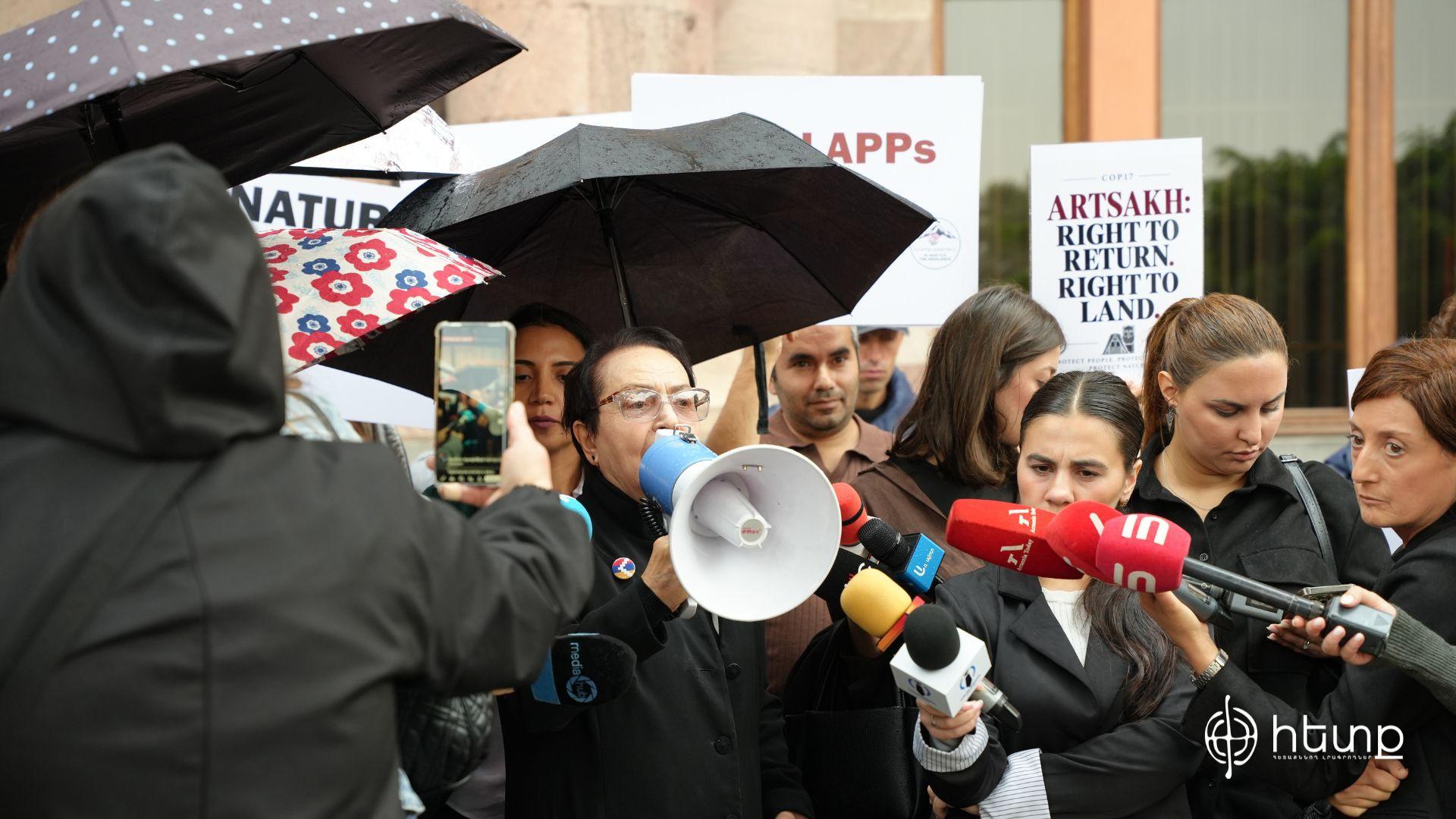
Despite these grounds, there is no mention of indigenous peoples—such as the indigenous population displaced from Artsakh—in Armenia’s national agenda. Furthermore, several NGOs from Artsakh had applied to have a dedicated pavilion in the “Green Zone.” The Ministry of Environment rejected the application without providing an explanation. Later, it stated that the application was not selected because it fell outside the scope of the environmental agenda’s priority themes. During COP17, the people of Artsakh organized a series of demonstrations and actions, calling for the protection of their rights as an indigenous people. However, within the framework of the conference, Armenia did not even mention the threats facing the ecosystem of Artsakh.
Key Outcomes of COP17: Decisions Reached
At the previous conference, COP16—held in Cali, Colombia—a permanent subsidiary body for Indigenous Peoples and local communities was established. However, the procedures for its operation had not yet been defined. One of the primary decisions at COP17 concerned the adoption of the working modalities for this body. During the final session of the conference, a co-chair model was approved: one co-chair representing states, and the other representing organizations of indigenous peoples and local communities. The parties also decided to form a “Fiends of the Bureau” group for each session of the body; the specific composition and operational details of this group were deferred to the next biodiversity conference.
For the representatives of indigenous peoples, it was also crucial to determine who would nominate the co-chair acting on their behalf. Under the adopted working modalities, they are responsible for nominating the candidate themselves, in accordance with their own internal procedures. However, the phrase “indigenous peoples and local communities” was added to the text. Canada and Denmark—the latter also speaking on behalf of Greenland—objected to this wording, expressing concern that it could allow the state to influence the nomination of candidates.
Regarding funding for indigenous peoples, the plan is to “encourage” donors to “consider simplified procedures and dedicated funding streams to ensure direct access for indigenous peoples and local communities.”
Yet the question of how a community might secure funding for its own project remains unanswered. The decision did not specify any allocated funds for communities, nor did it set a timeline for the submission of applications. When and under what conditions a community might be able to apply for a project it deems a priority depends on the subsequent actions of the donors.
Thus, at COP17, the demands of the people of Artsakh were voiced only in the streets. They never ended up having a separate platform within the Green Zone—at the very least—to speak about the connection they have maintained with their land and the rights associated with it following their displacement. As for the indigenous peoples who participated in the conference, despite the limited scope of the solutions, the outcome will only become clear at COP18.
If you found a typo you can notify us by selecting the text area and pressing CTRL+Enter